
Charles Hoskinson: Large data centers are no longer needed for AI computing.
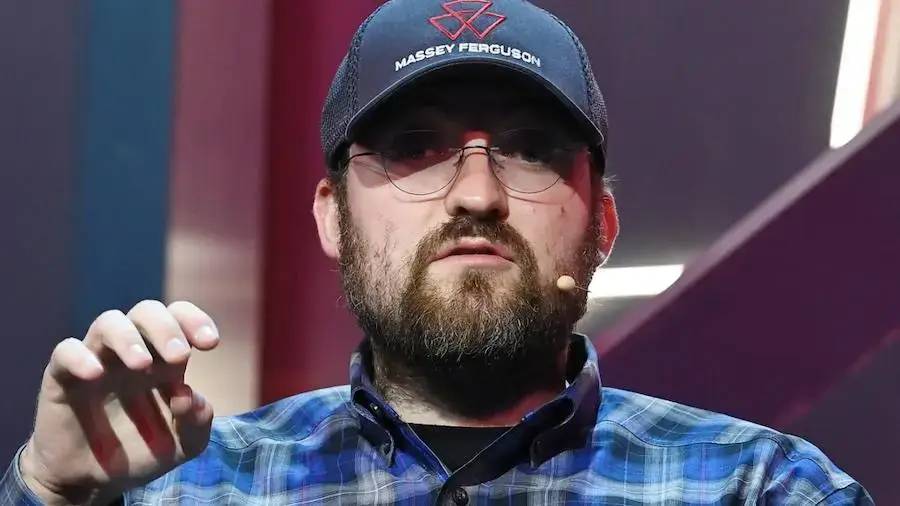
Cardano founder Charles Hoskinson believes that the crypto industry will be closely linked to artificial intelligence over the next five to ten years, though the current frenzy surrounding the construction and expansion of AI data centers will inevitably subside.
The CEO of Input Output Global (IOG), the company behind the Cardano blockchain, stated on the Deeptech Insights podcast that corporate spending on data centers is increasing tenfold annually, yet there is insufficient electricity to sustain this pace. According to the crypto entrepreneur, OpenAI and Anthropic have not yet become profitable; they need to scale their operations to break even, and the pre-training of models accounts for the bulk of their financial burden.
Hoskinson compared AI to cryptography: when he first started working in the digital asset industry, cryptographers refused to associate themselves with cryptocurrencies, but once money entered the sector, crypto entrepreneurs began attracting top talent, Hoskinson recounted. He believes the same fate awaits AI.
Blockchain technology can provide artificial intelligence with the infrastructure for payments, ownership, data verification, and distributed computing. The founder of Cardano believes that AI cannot yet handle these complex tasks on its own. Blockchain establishes common rules for all network participants, whereas AI companies make their own decisions regarding freedom of speech or acceptable standards of conduct.
According to Hoskinson, a blockchain-based system could provide a unified mechanism for establishing such rules. Blockchain makes it possible to track data creators and the history of information transfer, recording intellectual property rights and ensuring automatic royalty payments when AI systems utilize the work of others.
The IOG head also proposed pooling the resources of standard smartphones and graphics processing units (GPUs) to train AI models. In his view, it is better to use compact personal devices—such as the Apple Mac Studio with the M5 chip—for computing tasks, as this would be far more efficient than building new, large-scale data centers.
Recently, Ethereum co-founder Vitalik Buterin spoke out in defense of artificial intelligence, stating that it can be used not only by malicious actors but also by developers to create more powerful security tools and verify code safety.